This two-day summer school introduces the role of high-performance computing in scientific modeling and simulation, while providing practical knowledge of HPC architecture, software environments, parallel execution, and job-scheduling workflows. Participants will learn how supercomputing platforms support large-scale molecular, quantum, and engineering simulations.
The program combines expert-led lectures, demonstrations, and guided practical sessions using Linux, Slurm, GROMACS, Quantum ESPRESSO, and related scientific-computing tools. Participants will gain hands-on experience in preparing, submitting, monitoring, optimizing, and analyzing simulation workloads on the Namal Supercomputing Facility.
Learning Outcomes
Upon completion of the summer school, participants will be able to:
Explain the role of HPC in scientific modeling and simulation.
Navigate a Linux-based supercomputing environment and manage software modules.
Submit, monitor, and manage jobs using Slurm.
Prepare and execute introductory molecular-dynamics workflows with GROMACS.
Prepare and execute introductory quantum-simulation workflows with Quantum ESPRESSO.
Evaluate resource utilization for simulation workloads.
Process and analyze simulation outputs.
Apply basic MPI-based performance-optimization and scaling techniques.
Audience
Who Should Attend
The summer school is suitable for:
Undergraduate and graduate students
Researchers and academic faculty
Engineers and professionals in physics, chemistry, and materials science
Practitioners in biotechnology and mechanical engineering
Computational scientists and related disciplines
Entry Requirements
Prerequisites
Participants should have:
Basic familiarity with the Linux command line
Basic familiarity with scientific computing or numerical simulation
Prior experience with HPC, GROMACS, Quantum ESPRESSO, or Slurm is helpful but not mandatory.
Laptop Requirement Bring a laptop with at least 8 GB RAM and administrator access. Login credentials and software-installation instructions will be shared with confirmed participants before the summer school.
Technical Environment
Tools and Platforms
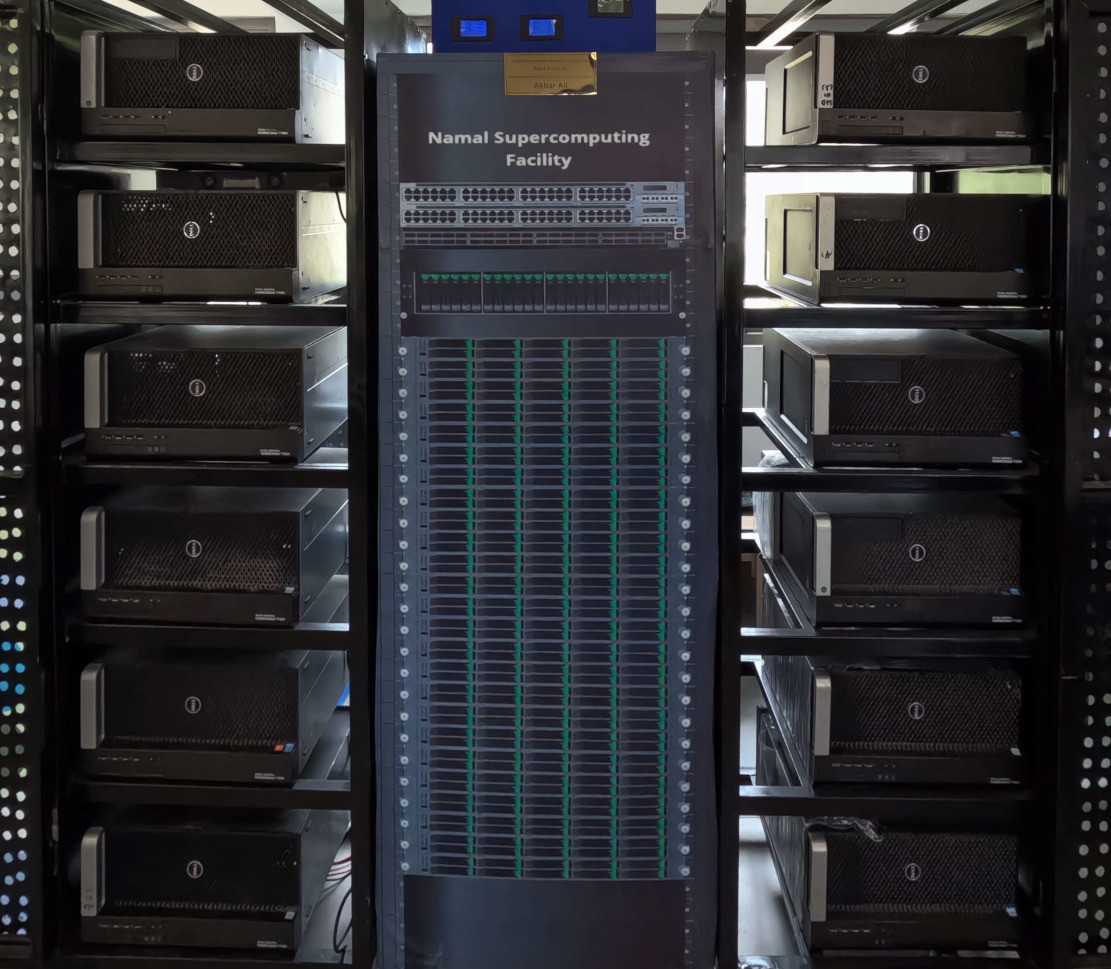
Namal Supercomputing Facility
Linux command-line environment
Slurm workload manager and Environment Modules
GROMACS
Quantum ESPRESSO
MPI and OpenMP
Scientific visualization and post-processing tools
Applied Learning
Practical Sessions
Guided practical activities will include:
Linux access and HPC software modules
Slurm job creation, submission, monitoring, and cancellation
GROMACS molecular-dynamics workflow
Quantum ESPRESSO input preparation and execution
MPI scaling and resource-utilization analysis
Simulation output processing and visualization
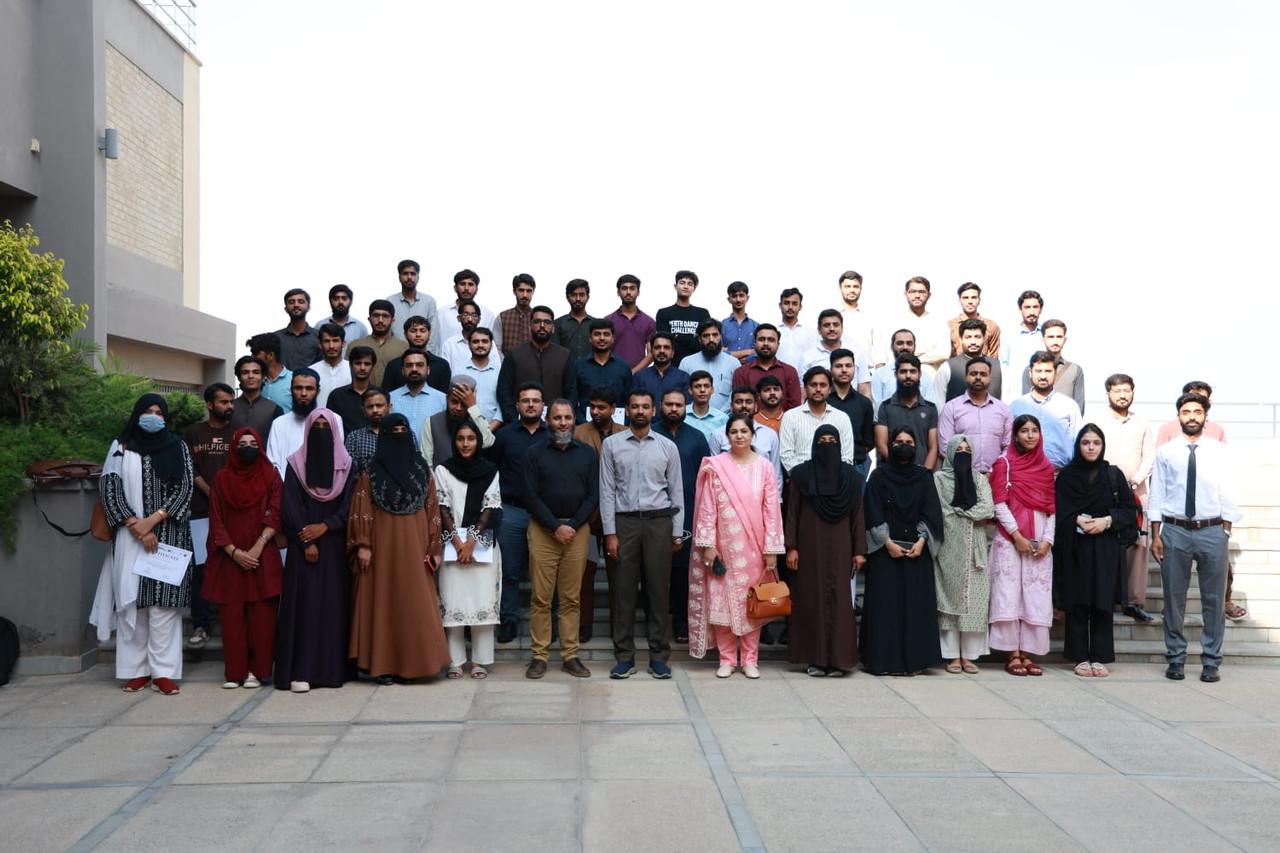
Gallery
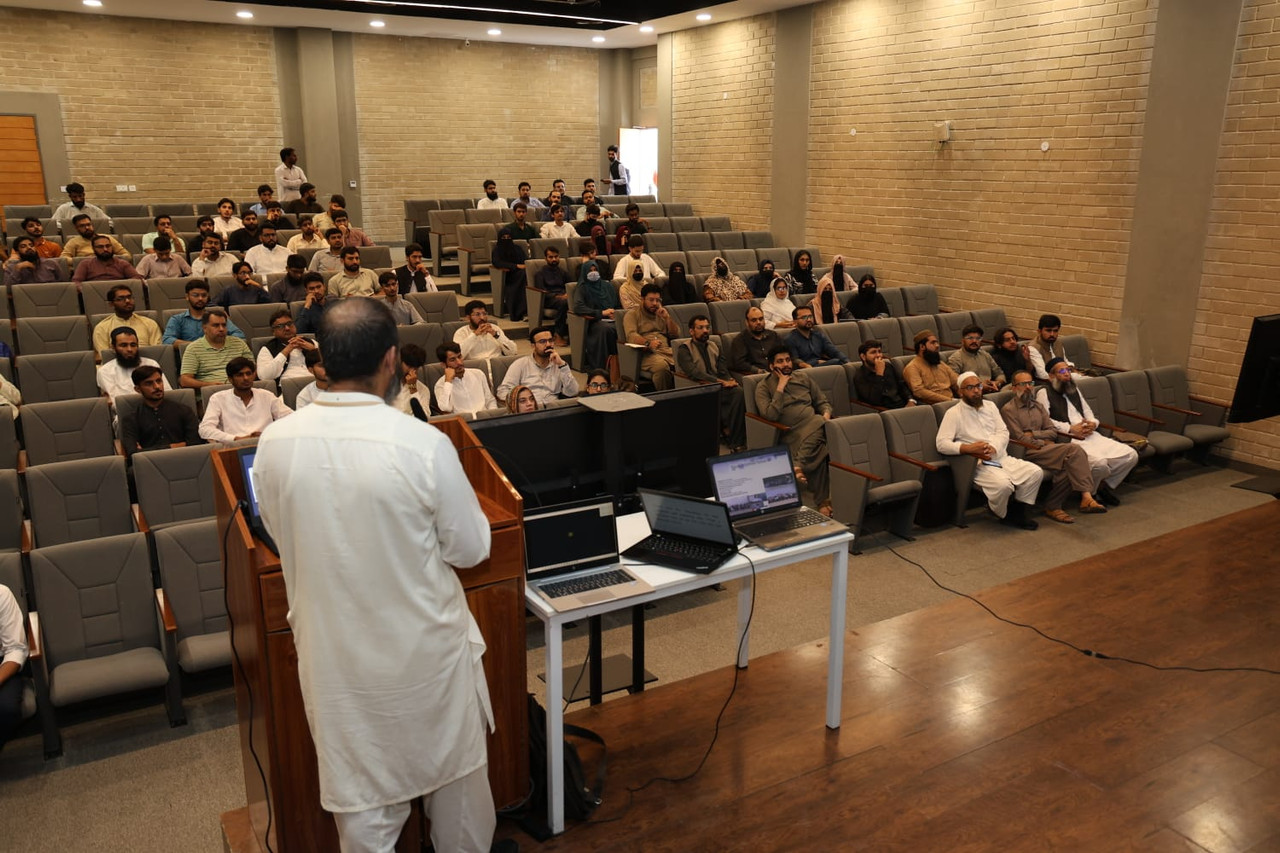
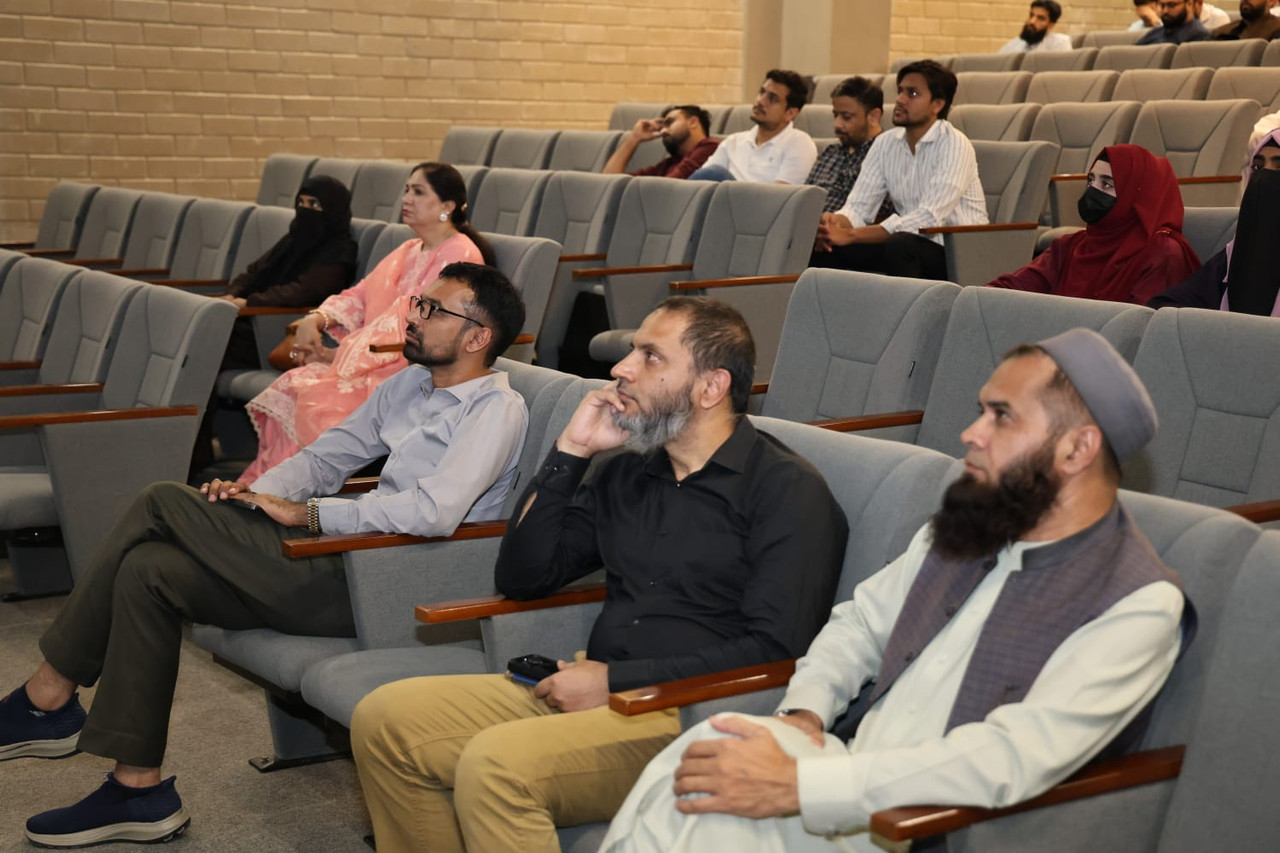
Lectures & Hands-on Session
The lecture details, hands-on activities, and trainer information are provided in the posters below.
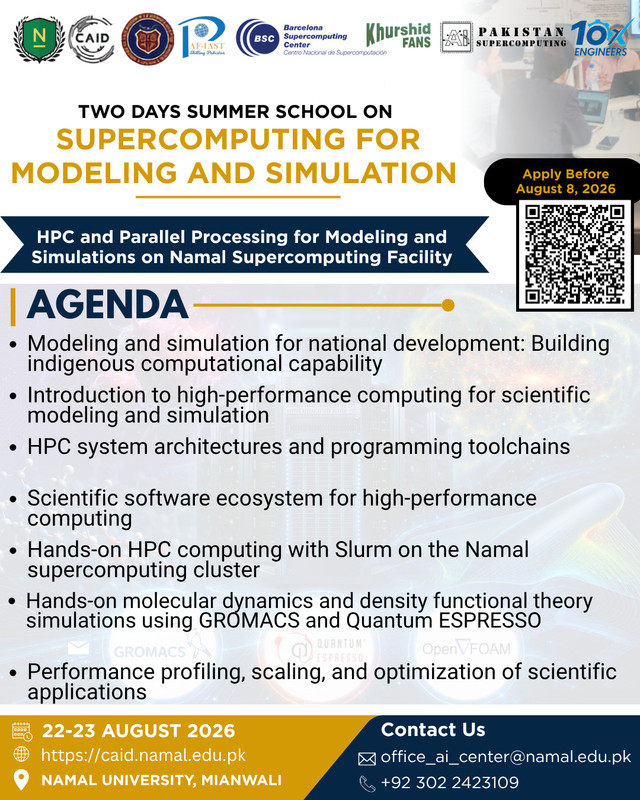
Two-Day Agenda & Session Topics
Day 1 – 22 August 2026
OpeningRegistration and Opening Remarks
Contribution of modeling and simulation to national research capacity
Role of simulation in industrial innovation and competitiveness
Importance of indigenous HPC capability for technological self-reliance
Role of HPC in scientific and engineering research
Differences between desktop, workstation, cluster, and supercomputing environments
Namal Supercomputing Facility: access, architecture, and workflow
Mathematical models, numerical methods, and simulation assumptions
Molecular, quantum, fluid, and engineering simulation categories
Simulation workflow: preprocessing, execution, validation, and analysis
Login nodes, compute nodes, accelerators, storage, and networking
Roles of CPUs, GPUs, memory, and interconnects in simulation workloads
Storage and data-movement considerations for large-scale simulations
Linux command-line operations in an HPC environment
File, directory, permissions, and data-management workflows
Environment variables, software modules, and resource-monitoring tools
Role of workload managers in shared HPC environments
Slurm resources, partitions, job scripts, and batch submission
Job monitoring, cancellation, troubleshooting, and resource accounting
PracticalLinux, software modules, and Slurm job management
ReviewClose of Day 1
Day 2 – 23 August 2026
Introduction to molecular dynamics and the GROMACS workflow
System preparation, topology generation, force-field selection, solvation, and ion addition
Energy minimization, NVT/NPT equilibration, production runs, and trajectory analysis
Introduction to density functional theory and Quantum ESPRESSO workflows
Input preparation, pseudopotentials, convergence, and execution
MPI-based parallel execution, scaling, performance analysis, and result interpretation
PracticalGROMACS and Quantum ESPRESSO workloads
PracticalMPI scaling and performance analysis
ReviewResult processing and visualization
ClosingCertificate distribution and closing ceremony
Lead Trainer
Dr. Tassadaq Hussain Cheema
Director, Centre for AI & Big Data (CAID)
Expertise Computer architecture, processor-based systems, and parallel computing.
A computer architect and technology leader with more than 20 years of national and international experience spanning research, industrial systems, project leadership, and professional training.
Registration Process
Submit the form Complete the online registration form with the required details.
Verification Places are assigned first-come, first-served after form and payment verification.
Confirmation Successful applicants are notified through email or WhatsApp.