This summer school provides students, researchers, faculty members, and early-career engineers with a practical understanding of RISC-V architecture, vector processing, and modern hardware–software co-design methodologies. Participants will explore how the open and extensible RISC-V ecosystem supports embedded systems, high-performance computing, and AI acceleration.
The program combines architectural concepts, accelerator integration, compiler toolchains, firmware development, Linux system bring-up, and MLIR-based AI compilation. Through expert-led lectures and guided practical sessions, participants will gain exposure to the workflows used to design, optimize, and deploy applications on RISC-V and vector-accelerator platforms.
Explain the fundamentals of the RISC-V ISA, vector processing, and accelerator-based computing.
Understand the major stages of hardware–software co-design, including accelerator integration, firmware control, compiler support, and Linux platform configuration.
Gain introductory practical experience in RISC-V cross-compilation, vector programming, accelerator communication, Linux bring-up, and MLIR-based compilation workflows.
The summer school is suitable for:
Participants should have:
Prior experience with RISC-V or MLIR is helpful but not mandatory.
Guided practical activities will include:
The lecture details, hands-on activities, and trainer information are provided in the posters below.
Director, Centre for AI & Big Data (CAID)
Dr. Tassadaq Hussain is a computer architect with more than 20 years of national and international experience in computer architecture, parallel computing, embedded systems, and hardware–software co-design. He has led the development of processor architectures and software solutions for industrial applications and has extensive experience in research, technology development, project leadership, and professional training.
Summer School on RISC-V Hardware–Software Co-Design
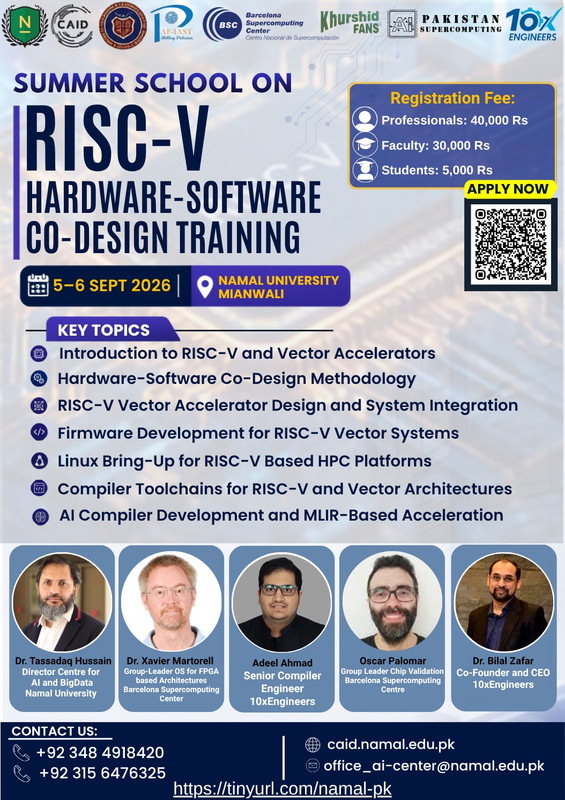
Objective and outcomes
Who should attend and how to participate
Who Should Attend
Prerequisites
Tools and Platforms
Practical Sessions
Lectures & Hands-on Session
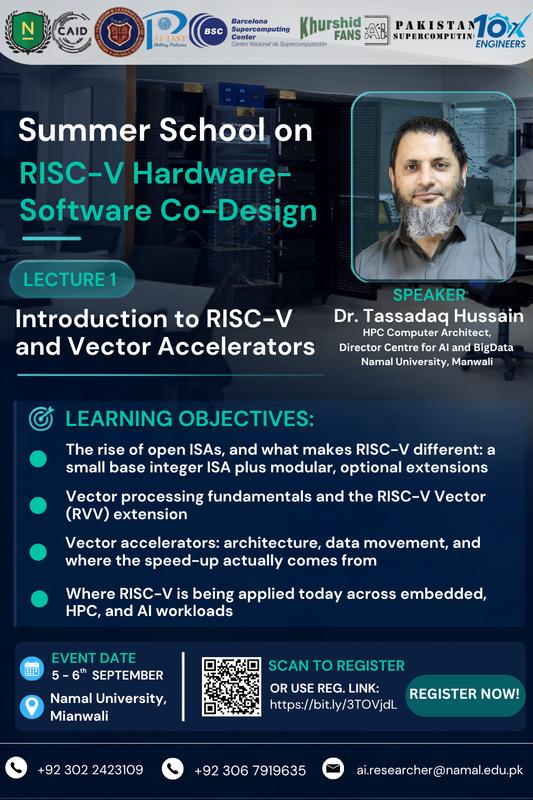
Lecture 1: Introduction to RISC-V and Vector Accelerators
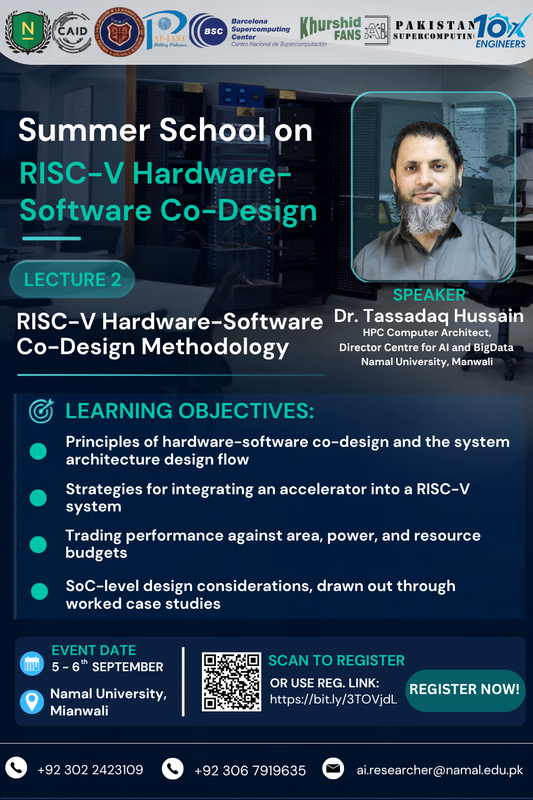
Lecture 2: RISC-V Hardware–Software Co-Design Methodology
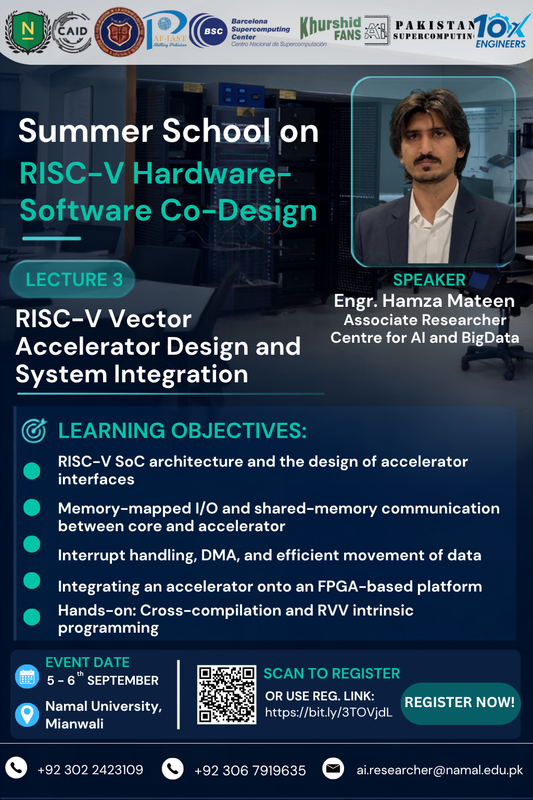
Lecture 3: RISC-V Vector Accelerator Design and System Integration
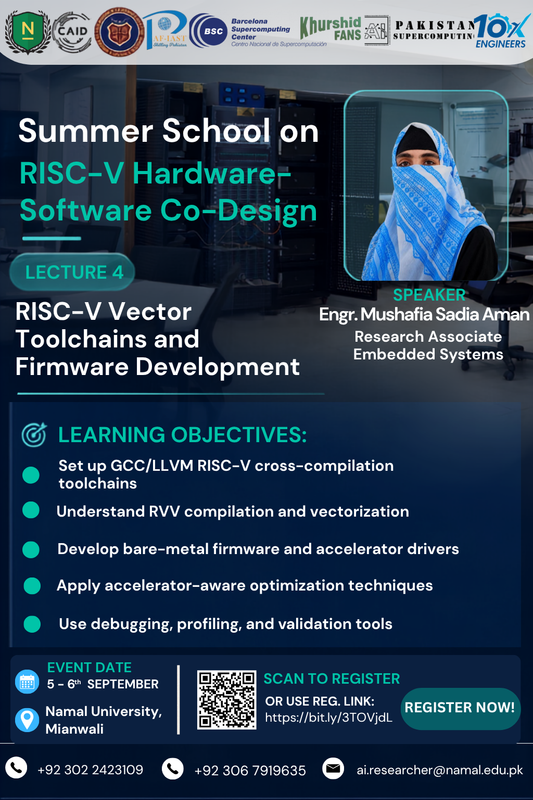
Lecture 4: RISC-V Vector Toolchains and Firmware Development
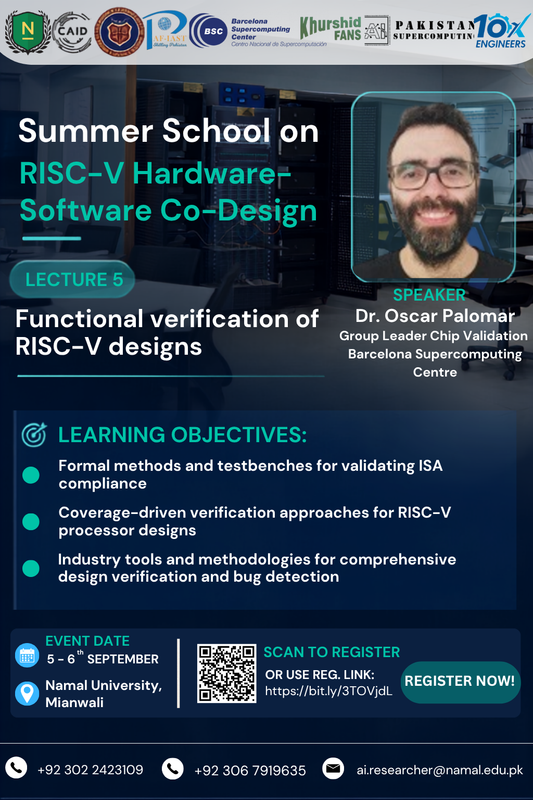
Lecture 5: Functional Verification of RISC-V Designs
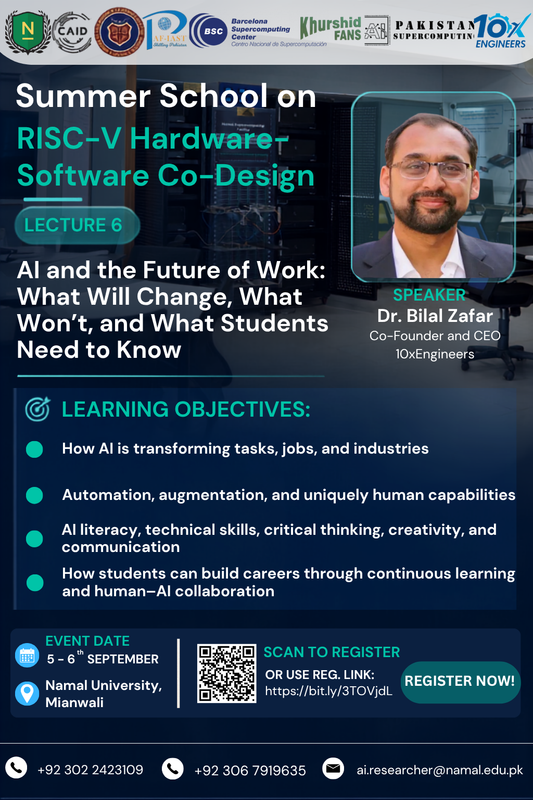
AI and the Future of Work: What Will Change, What Won’t
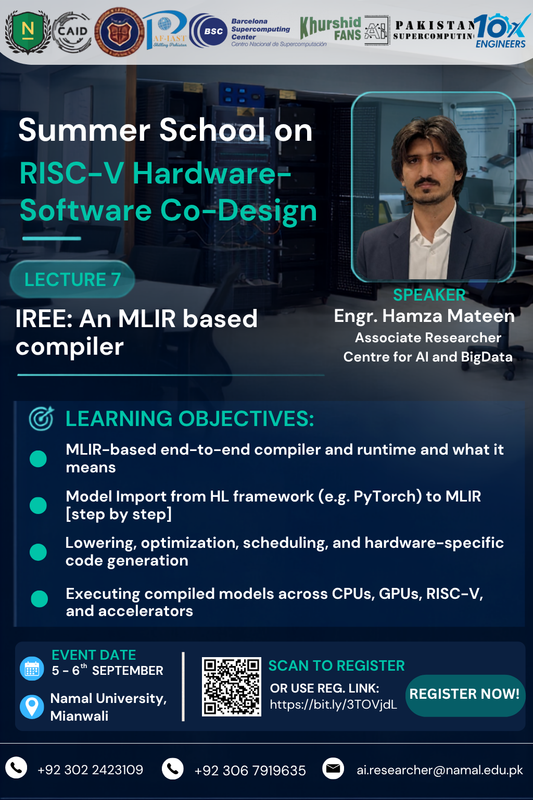
Lecture 6: IREE – An MLIR Based Compiler
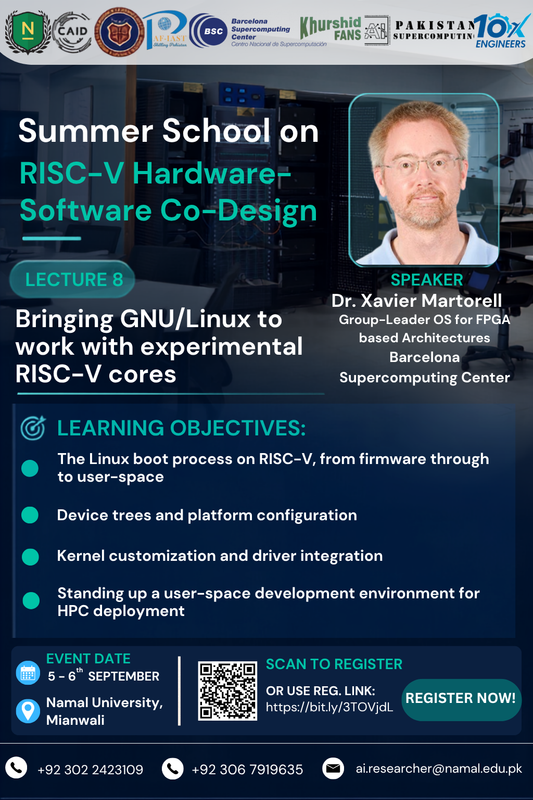
Lecture 7: Bringing GNU/Linux to Work with Experimental RISC-V Cores
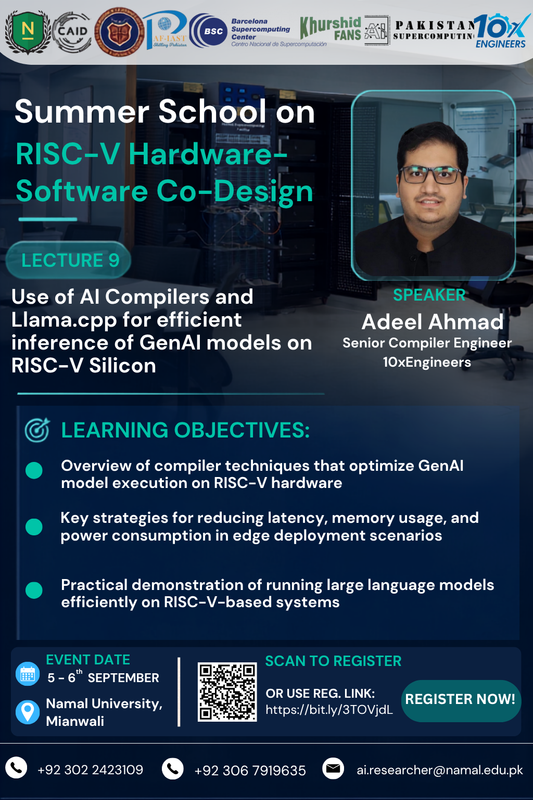
AI Compilers & Llama.cpp for GenAI Inference on RISC-V Silicon
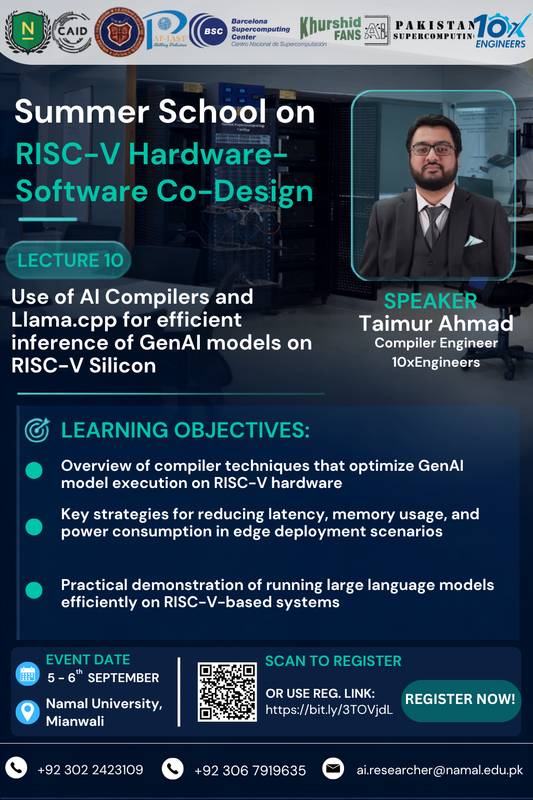
AI Compilers & Llama.cpp for GenAI Inference on RISC-V Silicon
Event highlights
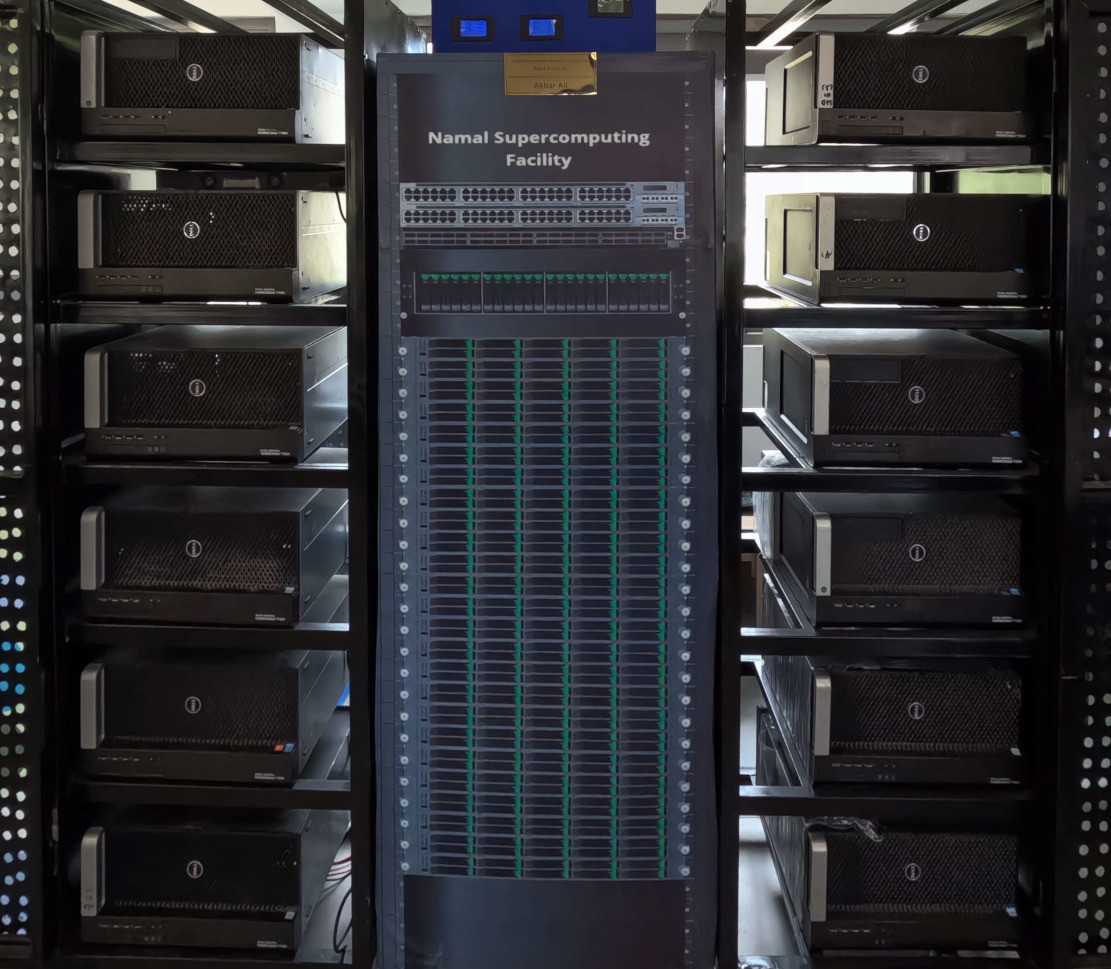
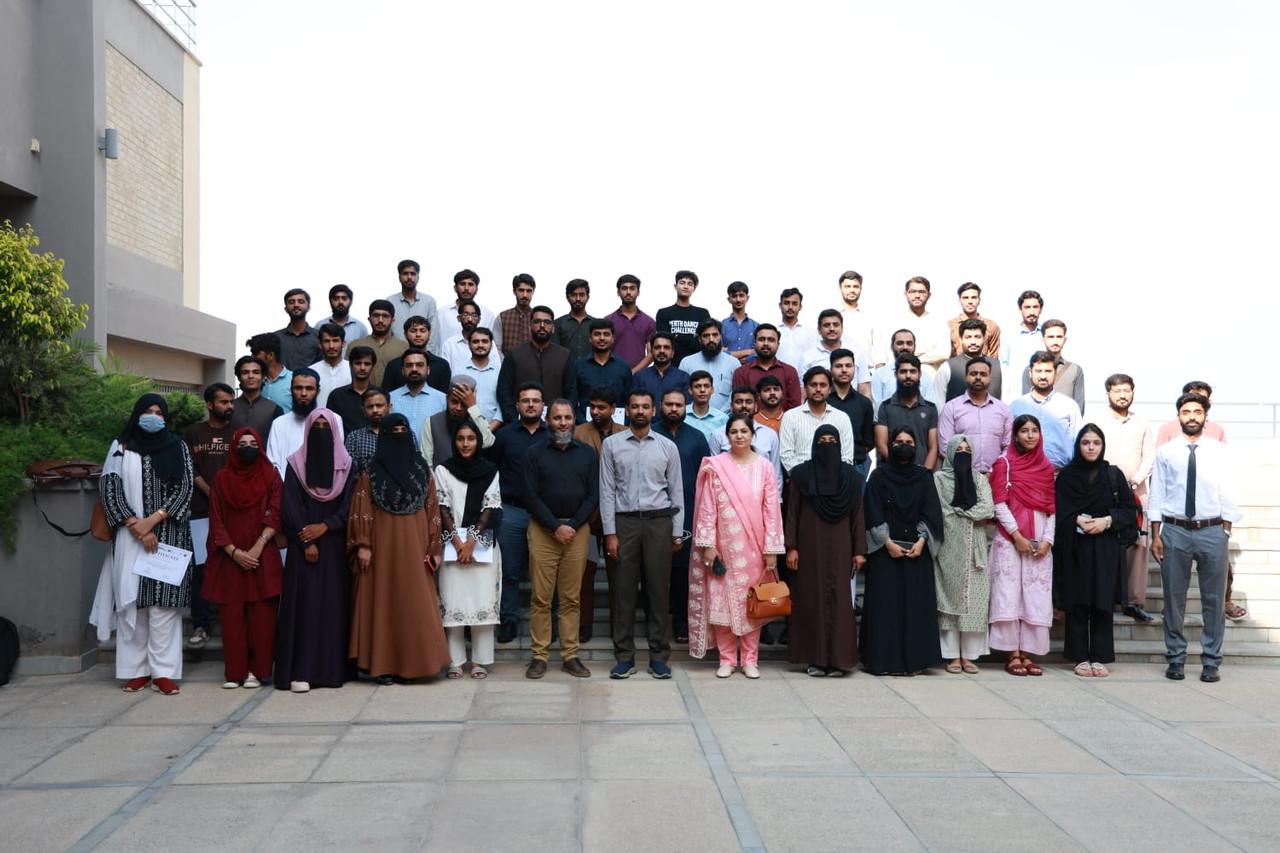
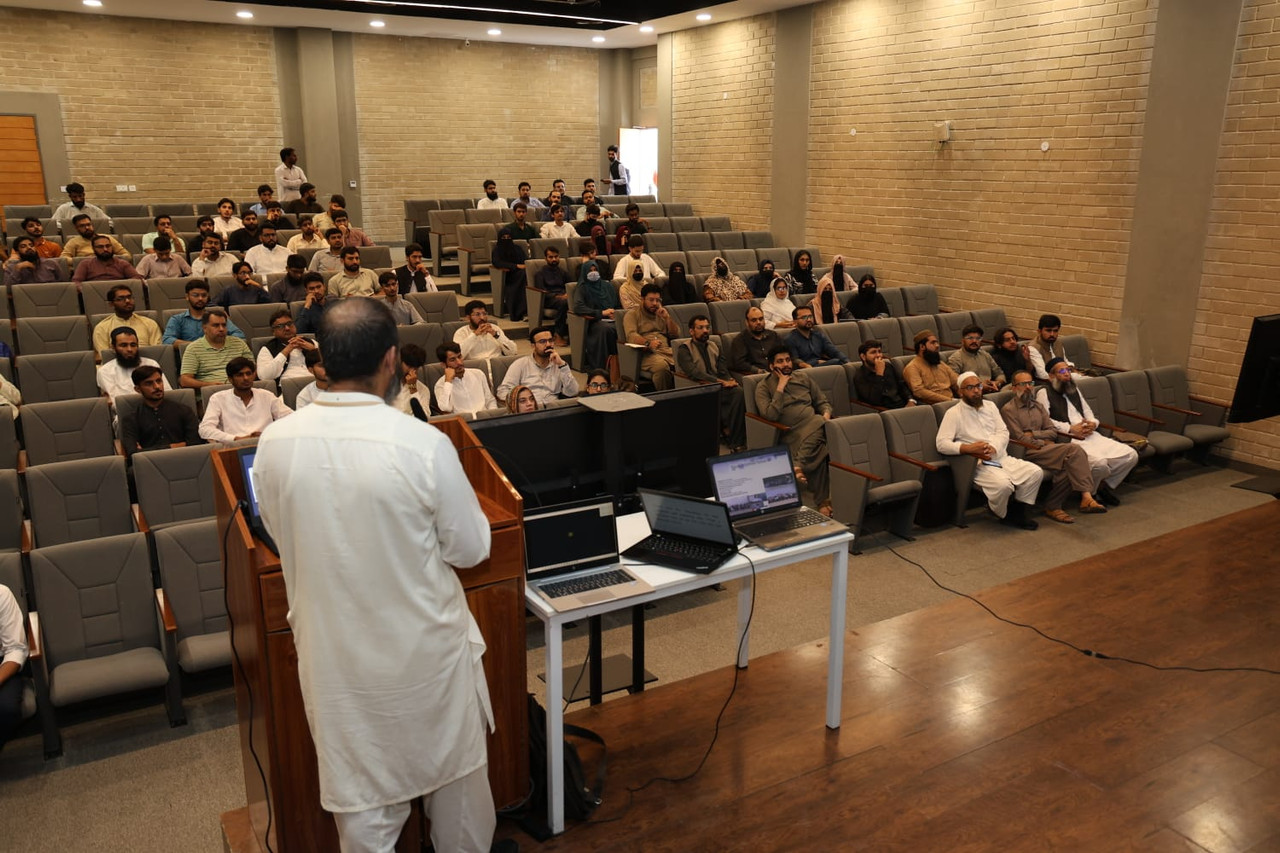
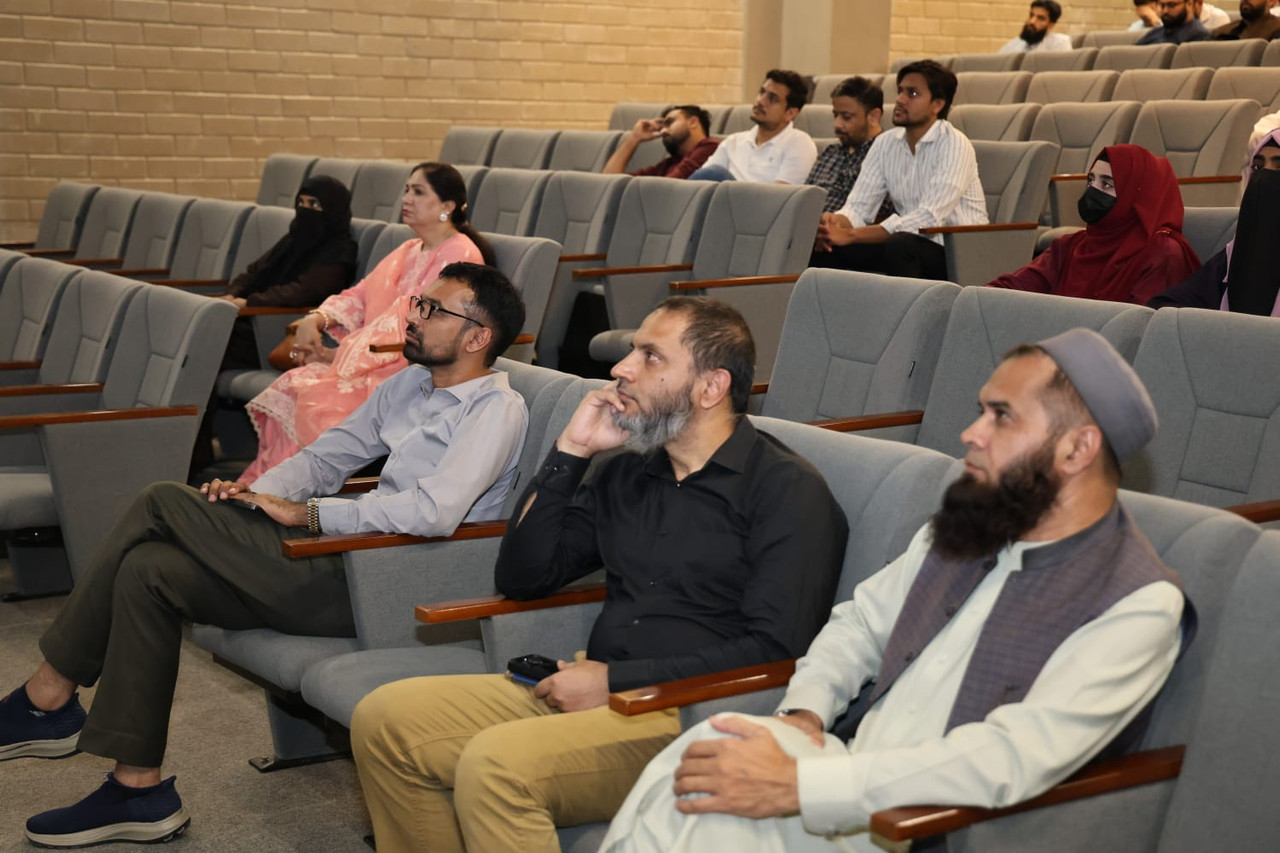
Two-Day Agenda & Session Topics
Day 1 – 5 September 2026
Day 2 – 6 September 2026
Lead Trainer
Dr. Tassadaq Hussain Cheema
Registration Process
Open Registration Form
CAID Summer School
Register Now Limited Seats – 30 Only
Summer School
Program
Laptop Requirement Bring a laptop with at least 8 GB RAM and administrator access. Software installation instructions will be shared with confirmed participants before the summer school.
Session Posters
Day 1
Day 1
Day 1
Day 1
Day 1
Day 2
Day 2
Day 2
Day 2
Day 2
Gallery
Agenda
OpeningRegistration and Opening Remarks · Coordinator
BreakLunch and Prayer Break
CloseClose of Day 1 · Coordinator
BreakLunch Break
ClosingCertificate Distribution and Closing Ceremony · Coordinator
Expertise Computer architecture, processor-based systems, and parallel programming.